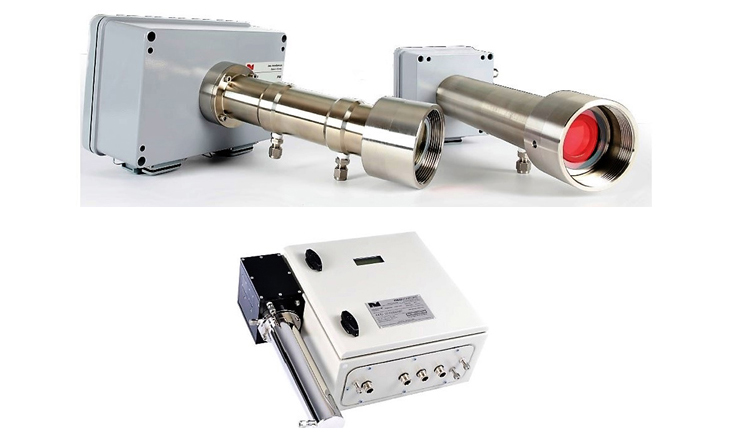


Hot air renewal.
Many manufacturing processes must use hot air dryers to evaporate solvents from coatings, laminates and finishes. The displacement and heating of large quantities of air involves high costs.
Most think that the first option to control costs is to reduce air renewal. To the point where complete drying is assured, at the desired production rate. However, this reduction of air could cause a fire or explosion. This is due to a possible dangerous accumulation of flammable vapors caused by insufficient air renewal.
As the cost of fuel increases, so do concerns about safety and energy optimization.
Control of flammable vapors with gas analyzer
The safety technology of ovens and dryers for processes in which solvents and other flammable substances are released and evaporate, relatively quickly, is governed throughout Europe by UNE-EN 1539:2015:. Dryers and ovens in which flammable substances are released.
Safety requirements that are equivalent to the NFPA 86 standard in the USA. Section 11.6.8.1 of the American Standard states: “…the safe air renewal rate shall be designed, and maintained during operation, to avoid vapor concentration in the furnace, not to exceed 25% of LFL (Flammability Limits) provided there is no active monitoring of the FLF.
Also, NFPA 86 allows for a substantial reduction in the air renewal rate in cases where “there is a constant solvent vapor concentration indicator and the controller is scheduled….”.
When such equipment is installed to continuously analyze the exhaust gases from the drying zone, the concentration of vapors in that zone may be higher. Provided that the 50% LEL is not exceeded. In addition to an increase in safety, it allows cost reduction, as less air needs to be heated for renewal.
Active safety monitoring can be performed by means of flame thermal analysis (FTA). It is applied in the furnace chamber, where the current limit concentration is monitored. Consequently, the clean air and exhaust gas blowers, as well as the furnace heating, can be regulated automatically, increasing process safety.
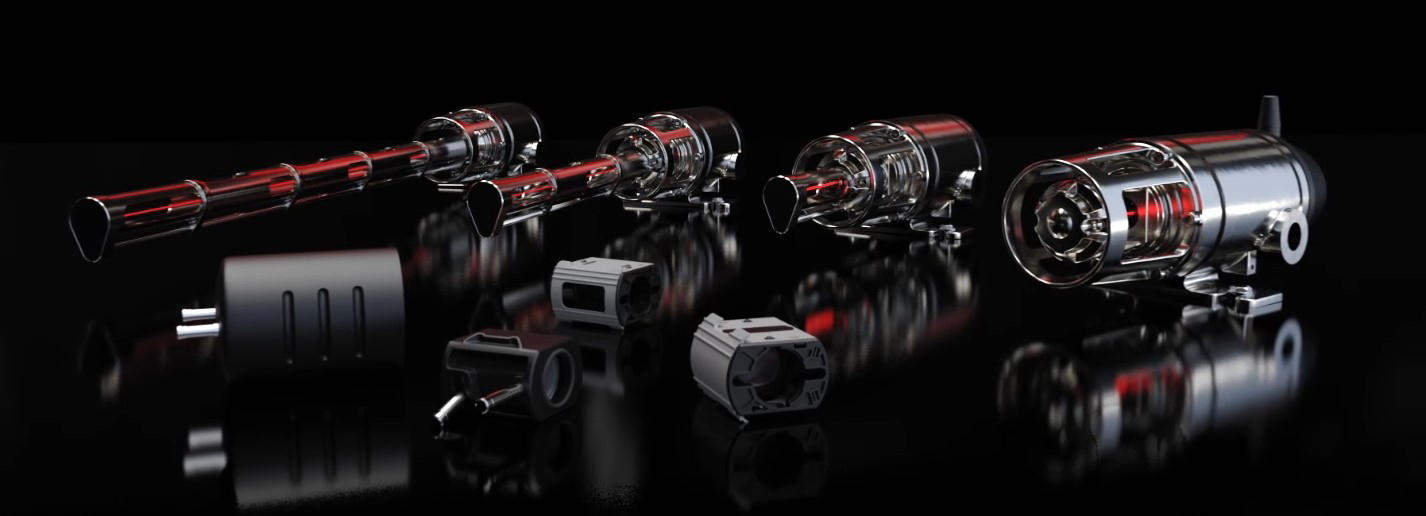
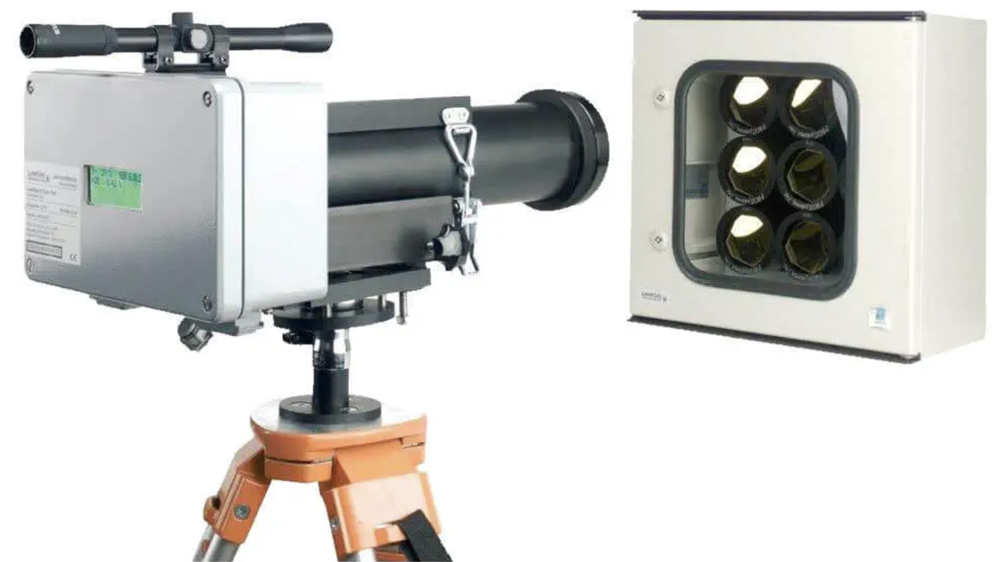
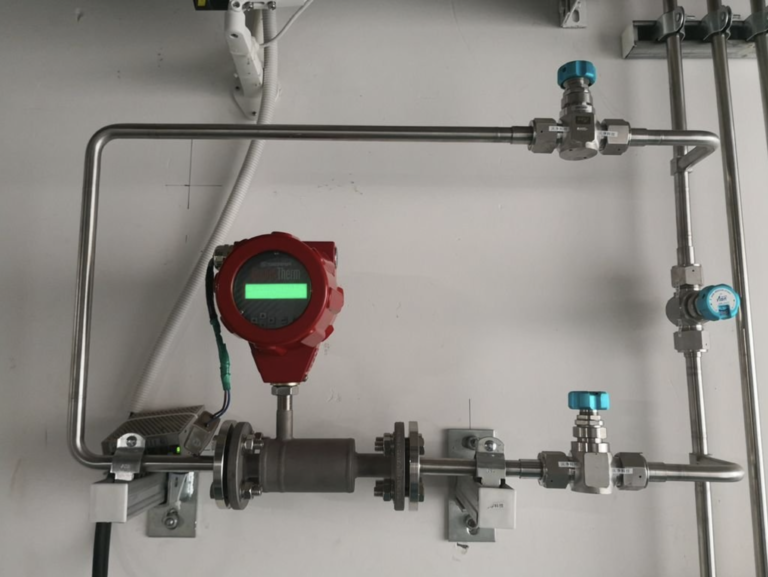
PREVEX gas analyzer for measuring solvent vapors and other flammable substances.
Some features of the PREVEX analyzer: 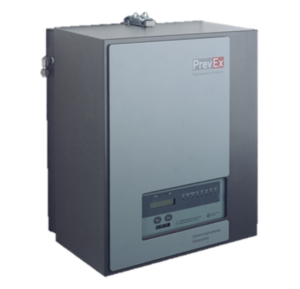
- Reliable and accurate measurement of the flammability (explosivity; % LEL) of the gas sample. This allows its use in process safety applications.
- Direct measurement of flammability without the need to apply correlation factors to other gases.
- Measurement in situ, in duct without the need for sample transport. Cold spots are avoided and response time is gained.
- Very fast response sensor: < 1s.
- Thanks to its universal calibration , it is very insensitive to variations in the composition of the gas matrix to be analyzed, contrary to other technologies such as catalytic sensors, FID, etc.
This allows savings at different points:
- An adjustment in air renewal without affecting production levels or affecting safety requirements.
- Increased production speed without increasing existing air or fuel costs
- Recirculation of part of the hot exhaust gases back to the drying area
- Reduction of furnace rates to reduce the fuel required for efficient operation of the thermal oxidizer.
- Reduction of kiln off-gases to reduce fuel required for an efficient process
The benefits can range from a simple reduction in air renewal and/or an increase in production. This results in significant fuel savings.
Some advantages of using analyzers may go unnoticed. An analyzer that reduces air renewal in the drying zone can also reduce the cost of emissions.
Also, in some cases, a smaller capacity thermal oxidizer could be used, or additional production lines could be added to the existing incinerator. In many cases, the cost of the PREVEX analyzer is quickly amortized.