

The supply of high purity hydrogen is critical for many industrial applications where impurities impair performance.
Hydrogen purification is required for:
- Chemical production.
- Metal refining.
- Oil refining.
- Food processing.
- Semiconductor manufacturing.
Refineries use hydrogen gas in their hydrocracking, de-aromatization or desulfurization process.
The recovery and purification of pure hydrogen can be performed from different hydrogen-rich streams, such as synthesis gases from natural gas steam reforming or gasification processes.
The H2 purity requirement is up to 99.9999% in moles and is achieved with a demanding purification process.
Process.
As the name suggests, HyCO plants produce large amounts of hydrogen (H2) and carbon monoxide (CO).
In this case, the HyCO process is fed with Natural Gas and Steam (Fig. 1).

Fig. 1 HYCO plant process diagram
It is a hydrogen production plant that uses natural gas as feedstock. Natural gas reacts with water vapor in the primary reformer at high temperature and pressure to obtain a synthesis gas, which is a mixture of mainly H2 and CO.
Reaction 1: CH4 + H2O ↔ 3H2 + CO
The flue gas is rich in hydrogen but contains a certain proportion of carbon monoxide. In another reactor, CO is converted into additional hydrogen by reaction with steam.
Reaction 2: CO + H2O ↔ H2 + CO2
The resulting gas has a high hydrogen content, along with carbon dioxide.
CO2 is a by-product that needs to be removed from the process. This is due to its high freezing point, which could obstruct the separation processes in the refrigerator.
CO2 is removed by absorption with an amine solution. It is then passed through a dryer to extract the moisture, as well as some of the CO2 left over from the previous process. The cooler will allow us to separate H2 and CO. The CO passes through 3 columns in the distillation refrigerator before it is a pure product.
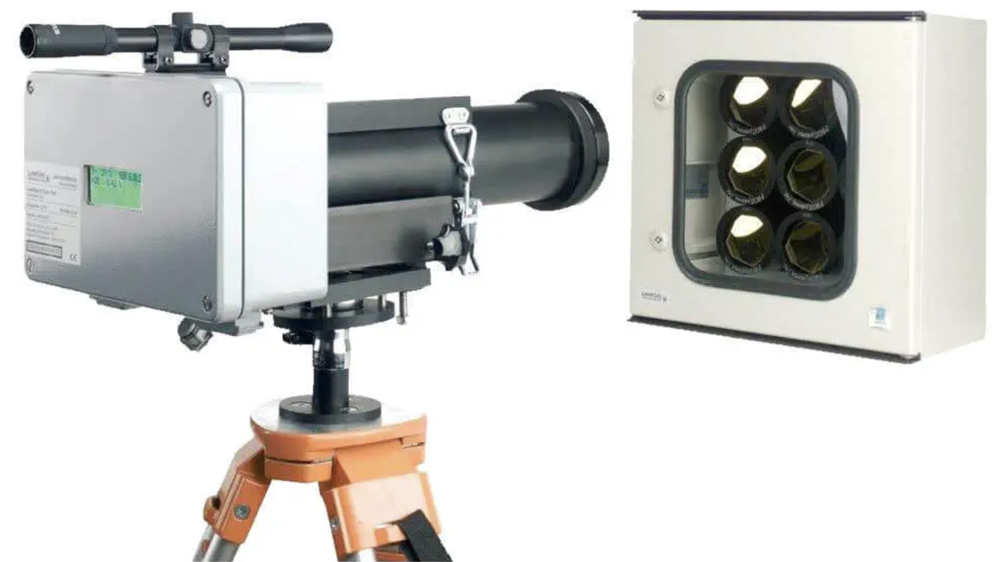
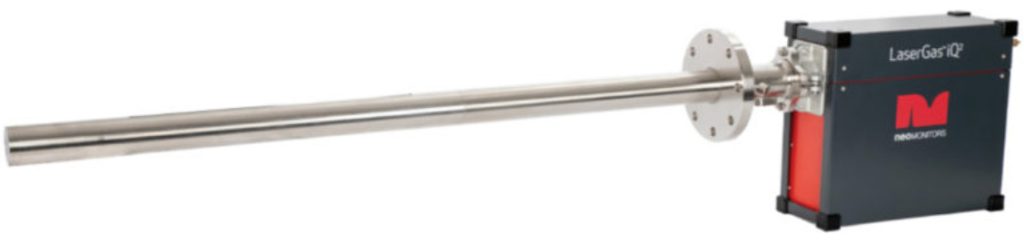
The separated hydrogen is then purified in a PSA (Pressure Swing Adsorption) unit. The PSA is the part of the process that is responsible for purifying the H2 in order to send it to the H2 network of the refinery. After the PSA unit it is important to know the purity of the Hydrogen, and this can be done with the gas analyzer model LaserGas II MP.
Typical process data:
Measurement of CO and CH4 in pure H2
Extractive solution,
CO range: 0-10 ppm
CH4 range: 0-20 ppm
Reasons.
H2 contamination must be detected. The reasons are as follows:
– Deliver high quality hydrogen to the customer.
– Protecting customer processes using hydrogen
– Optimize the durability of the HYCO plant absorber as much as possible, for cost reduction.
– Perform Absorb changeover only when limit values have been reached
– Increased plant efficiency
– Energy savings
Solution proposed by MATELCO.
A LaserGas II MP gas analyzer from the Norwegian firm NEO Monitors, which measures CO and CH4 simultaneously in hydrogen in very low ranges (ppb).
Measuring principle: Laser (TDLAS) single line spectroscopy
Zero stability allows low alarm levels and minimizes the risk of plant shutdowns due to false alarms.
By using this gas analyzer, maintenance costs are significantly reduced.

Advantages of the analyzer:
- Measurement of trace level gases (ppb), in an extractive mode, in a controlled environment.
- Highly reliable real-time measurement
- Reduction of emissions to the environment
- Easy to install and operate
- Process optimization by reducing operating costs
- Energy savings
- Response time in seconds (2 to 10 depending on flow rate)
- No interference from other gases in the sample
- No zero drift
- Minimal maintenance and operating costs
- ATEX Certificate
If you need to solve any doubts or questions you may have about the gas analyzer, just send us an e-mail from the contact section and one of our experts will contact you as soon as possible.