

The chemical elements iron and manganese
Manganese occurs naturally in soil, surface water and groundwater. Manganese is an important cofactor for many kinds of enzymes.
Enzymes are proteins that act as biological catalysts, accelerating chemical reactions.
Manganese is an essential dietary element for humans due to its role as a coenzyme in several biological processes, including macronutrient metabolism, bone formation and free radical defense systems. The human body contains about 12 mg of manganese, mainly in the bones.
Iron is the first most abundant metal in planetary mass, due to the fact that the planet, in its core, concentrates the greatest mass of native iron, equivalent to 70%. The body of an adult human being contains approximately 4 grams (0.005% of body weight) of iron, mainly in hemoglobin and myoglobin. These two proteins play an essential role in the metabolism of vertebrates; the transport of oxygen through the blood and the storage of oxygen in the muscles respectively. To maintain the necessary levels, human iron metabolism requires a minimum of iron in the diet.

The health risks of iron and manganese
The health risks from iron and manganese are small; however, there are risks associated with bacteria causing elevated iron concentrations due to corrosion. The lethal dose of iron for humans is 200-250 mg/kg body weight, which would result in extensive gastrointestinal bleeding. Iron intake with drinking water is too low to pose a health concern, making iron toxicity uncommon. However, iron oxides may be responsible for increased arsenic levels.
Water sources, such as groundwater, often contain iron and manganese. Manganese is usually present in much lower concentrations than iron. Manganese and iron control ensures that tap water does not discolor or taste bad. Customer complaints, subsequent investigation and agreed actions can be very costly. Turbidity monitoring can generate alarms in case of accidental events (breakthroughs, storms, floods) or for trends and monitoring of the final product. More specific measurements should be made to meet customer satisfaction in terms of taste, color or hardness.
About the application: control of iron and manganese in drinking water.
In Chile, the local regulatory limit for iron is 0.3 ppm and for manganese it is 0.1 ppm. If levels are above these limits, critical sanctions would be applied. Therefore, the measurements are located at the outlet of the drinking water plants and/or downstream of the filtration system. Normally, there is no increase in the value of iron and manganese in surface water, however, water wells can be a problem as higher values are expected. The client is one of the main suppliers of drinking water in southern Chile.
The main measure to ensure that the levels are below the legal requirements must be performed downstream of the source water filtration system. Each drinking water plant has 3 water sources but, in all cases, only 1 water source has problems with iron and manganese. Therefore, only source water with high levels of iron and manganese (see number 1 in the image below) is monitored individually.
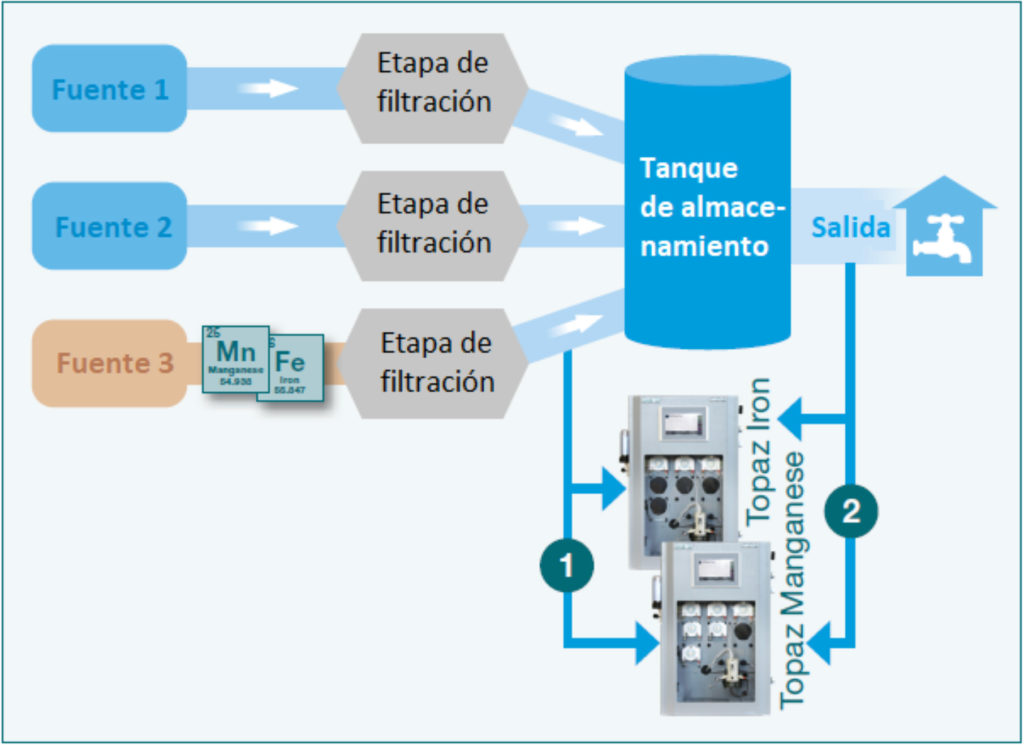
In addition, to ensure quality, the exit point is also monitored (see number 2). This point should always have iron and manganese levels equal to or lower than the previous measurement points.
Swan Chile’s installation
Many plants still perform manual sampling in the laboratory, which is discontinuous and can cause delays in the detection of iron and manganese levels. The customer wanted to increase quality assurance and therefore switched to continuous on-line monitoring with the Topaz Iron analyzer from Seres OL (a Swan Group company).
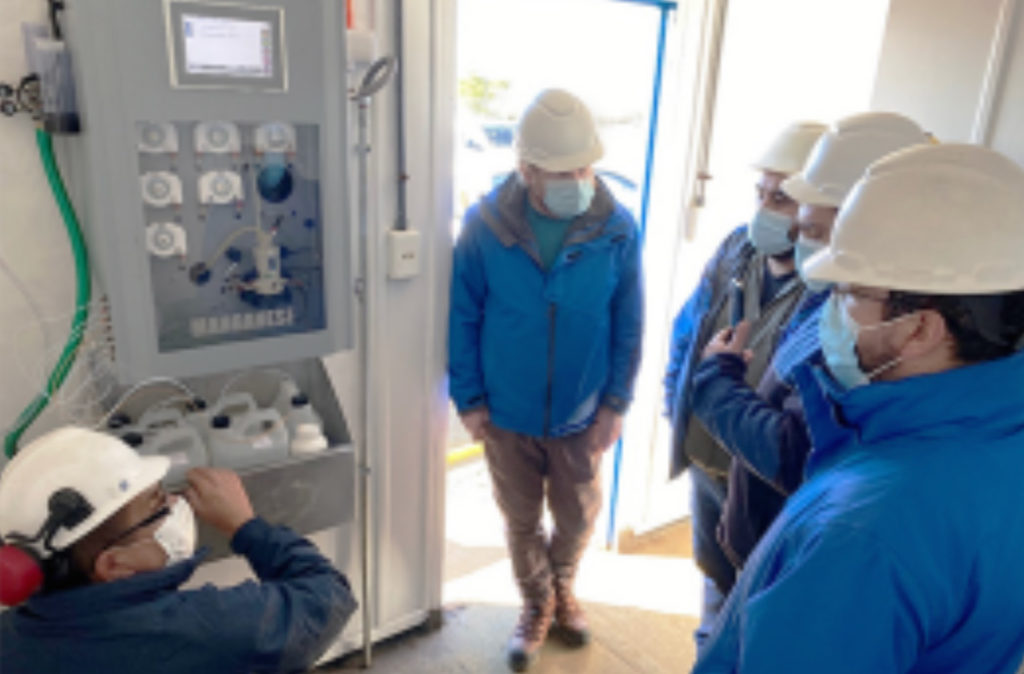
Seres OL Topaz Iron and Topaz Manganese monitors at customer site for final product monitoring.
Commissioning and handover of Topaz Iron and Topaz Manganese monitors with the customer
If you have any questions, please contact SWAN ANALISIS IBERICA,
e-mail: comercial@swananalisis.es