

In most industries, combustion processes are used as a source of heat and energy. For this purpose, boilers, heaters and furnaces burn fuels such as natural gas, biogas or even waste. When deciding on a new combustion control system, the following points should be taken into account:
- Capital expenditures (CAPEX)
- Maintenance and operating expenses (OPEX)
- Potential fuel savings
- Maximizing heater performance
- Minimization of pollutants such as nitrogen oxides (NOx)
Combustion efficiency
A look at combustion theory shows that the ideal operating point is at a slightly lean speed, i.e. with an excess of air. Lean combustion ensures that the fuel burns completely under all conditions. This minimizes the potential for high concentrations of carbon monoxide (CO) and unburned fuel in the flue gas. Otherwise, fuel would be wasted and unsafe combustion conditions could result.
Originally only oxygen (O2) was used as a control measure and the operating point was typically between 5% and 10% excess air, which meant low efficiency and high NOx generation. Additional CO measurements are now used to avoid fuel-rich operations, and to provide information on the O2 set point. With this additional measurement, the operating point can be reduced to a range between 3 % and 6 % excess air.
Examples
As an example, we choose a typical ETHYLENE CRACKER, 200 MBTU per heater per hour. By reducing the operating point from 7% excess air to 4%, at a burn rate of 85% to 100%; the annual fuel savings is approximately $80,000 per heater (assuming $2.33/MBTU). That means that for an Ethylene Cracker with six heating cells, the combined annual fuel savings is nearly $500,000. At the same time, NOx emissions would be reduced by about 33% due to less excess air (Figure 1).

Figure 1: Annual fuel savings per heater in k$ (right, blue axis) and NOx emissions reduction in % (left, yellow blocks) for various operating points relative to a 7% operating point.
Combustion optimization technologies
Over time, several different technologies have been developed to optimize combustion. Most of them have been based on single-point measurement sensors (probes), which must be in physical contact with the process gas. Zirconium oxide (ZrO2) probes and electrochemical sensors are currently the most widely used. However, these sensors suffer rapid degradation due to harsh process conditions; catalyst poisoning or inhibition if exposed to reducing gases (e.g. sulfur). Furthermore, the fuel sensors (COe) are not specific for CO, but measure the sum of all combustible gases, i.e. they also measure hydrogen (H2) and hydrocarbons.
In contrast to these, Modulatable Diode Laser Absorption Spectroscopy (TDLAS) performs the measurement without contact with the sample, by interaction of the laser light and the gas molecules. Measurements can be carried out directly in process (in situ) through the combustion chamber, thus obtaining results representative of the entire chamber, and not only of a point close to the wall.
Non-contact measurement
In addition, since the measurement is non-contact, the analyzers are not exposed to corrosive gases and high temperatures, and a complex sample extraction system with high maintenance is generally not required. Also, ZrO2 probes require monthly recalibration due to degradation, unlike TDLAS analyzers that are validated only once a year.
The TDLAS analyzer does not require a sample extraction system and maintenance is much lower, which implies a significant reduction in operating expenses (OPEX) compared to other technologies. In addition, TDLAS analyzers are very sensitive and selective, so very low detection limits are achieved without interference from other process gases. This means that unlike COe measurements, TDLAS analyzers measure the actual CO value, leading to further optimization of the operating point.
Combustion analysis solutions
One of NEO Monitors’ solutions for complete combustion analysis would be two on-site LaserGas™ III analyzers:
- O2 and process temperature measurement
- Measurement of CO, methane (CH4) and water vapor (H2O).

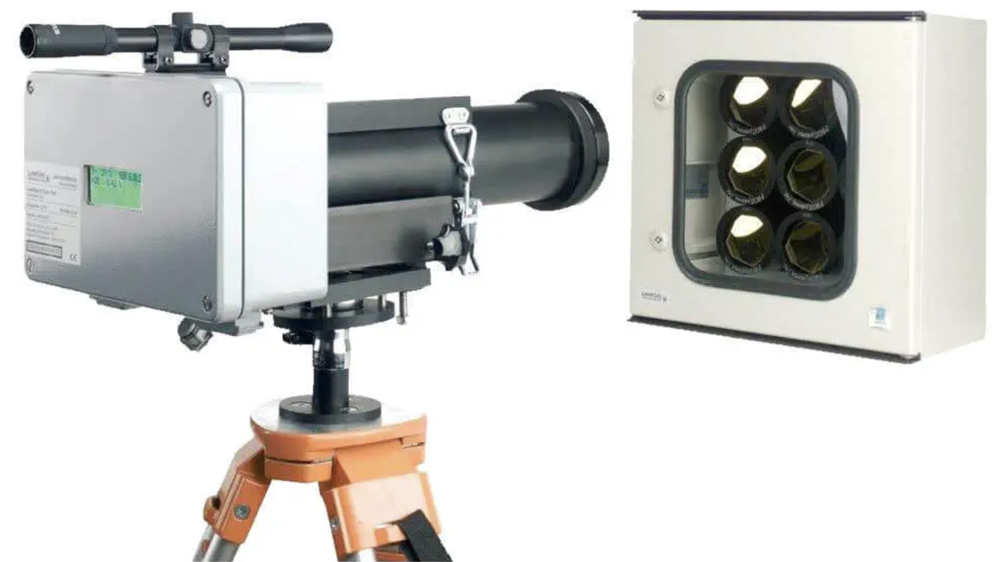
Each LaserGas™ III analyzer consists of an emitter and a receiver that are mounted on diametrically opposite sides of the combustion chamber. Emitter-receiver installation costs are somewhat higher than those of single-point measurement sensors; significantly lower maintenance costs and better combustion optimization compensate for this after a short period of operation.
Fuel savings calculations
If we look again at the fuel savings calculation from the previous example and also take into account the difference in CAPEX and OPEX between the point measurement type sensors (ZrO2 and CO) and the TDLAS analyzers, we obtain the total benefits of TDLAS per heater during the first five years of operation (Figure 2).

Figure 2: Total TDLAS benefits in k$ per heater during the first five years of operation.
For an ethylene cracker with six heaters, the benefits after five years of operation are more than $2.7 million.
Another solution proposed by NEO Monitors that further reduces CAPEX is with its LaserGas™ iQ2 analyzer.

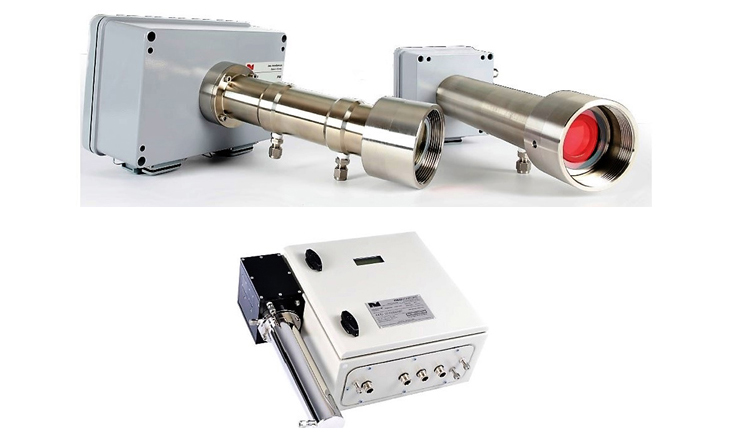
This analyzer combines the transmitter and receiver units in a single transducer configuration. In this case, a reflector is used to send the beam back to the receiver so that the beam passes through the monitored gas sample twice. A special probe-type version, the LaserGas™ iQ2 Vulcan, is also available, specially designed for the replacement of already installed probes from other manufacturers. In this case, only a single flange is required for installation, which reduces investment costs to a minimum, while retaining all the other advantages of laser analyzer measurements.

Other advantages
Other advantages of using LaserGas™ analyzers for combustion control is that these analyzers can also measure CH4, H2O and process temperature.
- CH4. During the start-up phase of a combustion process, information on CH4 concentration is essential for safety reasons, to prevent explosions.
- H2O. H2O measurements can be used to detect tube ruptures in boilers, and/or the conversion of wet to dry basis measurements, to ensure agreement with measurements provided by typical (dry basis) extractive analysis systems.
- Temperature. A TDLAS-based process temperature measurement is the best solution for proper compensation of concentration measurements.
IN SHORT: NON-CONTACT MEASUREMENTS ARE THE FUTURE OF GAS DETECTION.