

Introduction
The metals in the pipe tend to oxidize when they come into contact with dissolved oxygen in the water. This results in the formation of stable metal oxides. Corrosion in water distribution systems can affect the health of consumers, costs and the aesthetics of treated water. Older systems may include lead-based solder that must be protected to avoid elevated lead concentrations. In fact, this is regulated by Directive (EU) 2020/2184 of the European Parliament at 5 ug/l, as it is very harmful to health.
Corrosion inhibitors such as inorganic phosphates in the form of polyphosphates, orthophosphates, glassy phosphates and bimetallic phosphates are often used. The addition of phosphates can form a protective coating on the pipe and contain corrosion. To ensure correct phosphate dosing for proper corrosion control, monitoring with a reliable analyzer is required. This also leads to a reduction in operating costs.
Corrosion control with phosphate.
Phosphate is commonly used to minimize corrosion in drinking water distribution systems. We refer here to residential, commercial and industrial potable water pipelines. Phosphate also serves to reduce lead corrosion and to meet government standards. To achieve passivation of new or previously untreated systems, phosphate is generally dosed at > 3.0 mg/L as orthophosphate. The typical maintenance dosage to ensure corrosion control is 0.5 to 1.5 mg/L.
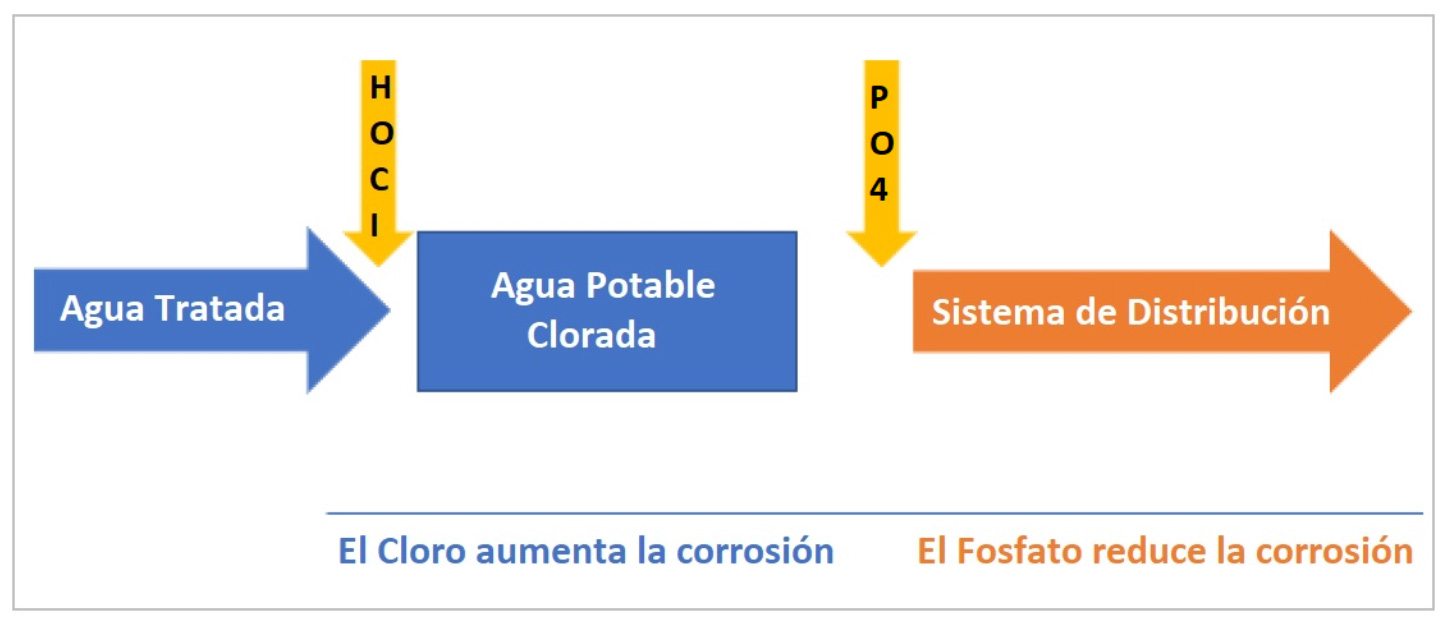
Phosphate treatment monitoring.
It is necessary to monitor phosphate concentration to ensure adequate corrosion control. Manual monitoring is possible. However, to avoid under- or over-feeding during periods of fluctuating system flow, continuous monitoring is advantageous. Phosphate dosing control with an on-line analyzer allows:
- Minimize corrosion to meet regulatory requirements
- Reduce costs of added chemicals
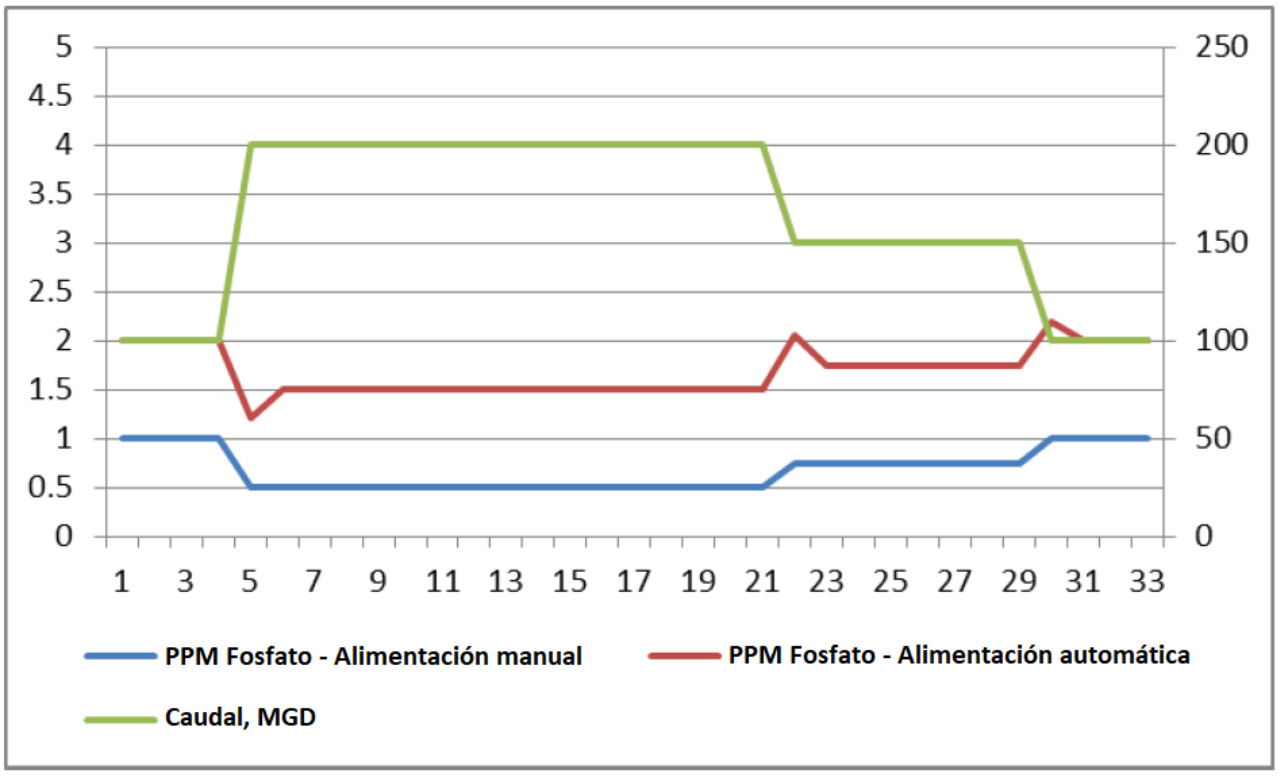
The graph above shows phosphate under-dosing (blue line) as the flow rate increases with the manual feed system. The results are an increased risk of corrosion in the distribution network and a higher concentration of lead in the drinking water. A continuous system with automatic feed allows maintenance of a desired set point regardless of flow fluctuation.
An automatic phosphate measurement provides all the necessary information. This makes it easy to keep proper control of the corrosion inhibitor to minimize corrosion and cost.
OUR SOLUTION: AMI Phosphate II Analyzer
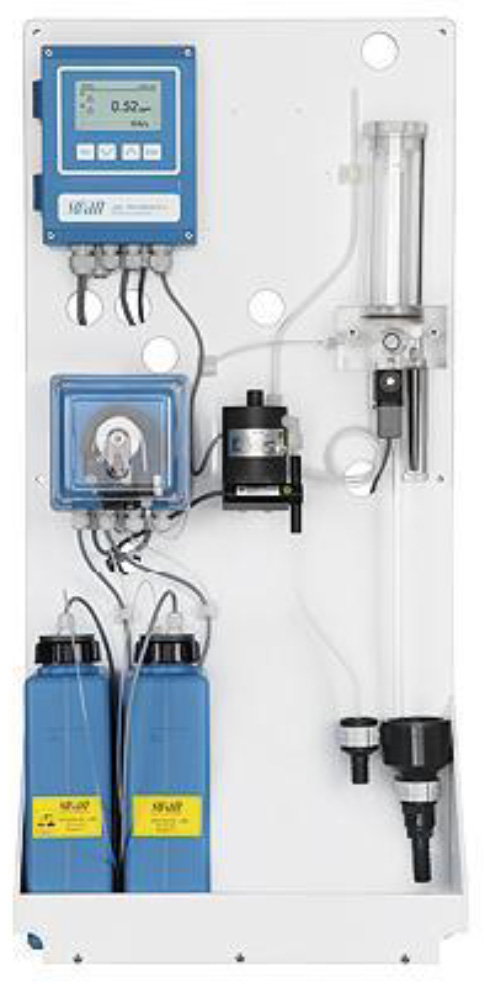 On-line analyzer from the Swiss company SWAN ANALYTICAL INSTRUMENTS for automatic and continuous measurement of dissolved orthophosphates. Ideal for monitoring and controlling the phosphate dosing process. Measuring range: 0.01 to 10 ppm PO4
Its overflow chamber and continuous flow photometer eliminate coating and clogging problems. The optional cleaning module reduces maintenance efforts.
Integrated monitoring functions generate alarms if the measurement is invalid. Common problems are lack of flow, empty reagent reservoirs, valve and photometer functionality.
No data loss after power failure. All data are stored in permanent memory. It has overvoltage protection of inputs and outputs, and galvanic isolation of measurement inputs and analog outputs. The analyzer is factory tested and ready for installation and operation.