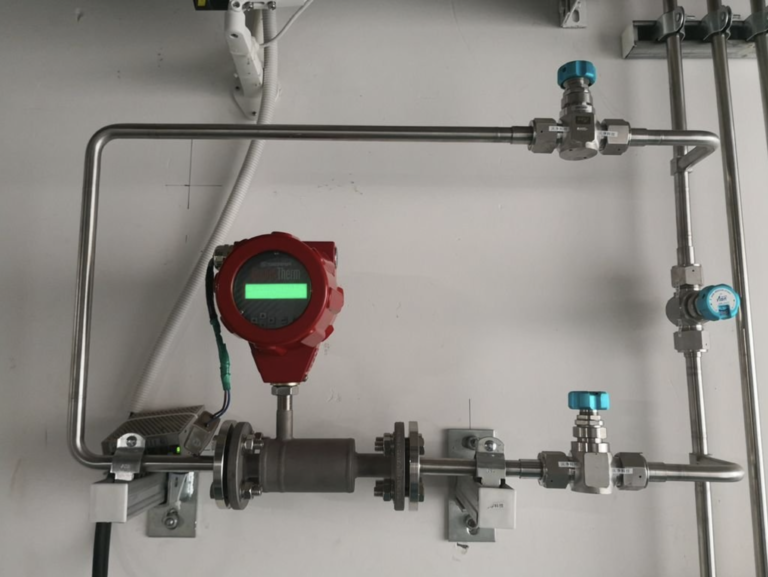


In order to preserve the natural environment, sanitation systems consisting of sewage and rainwater networks have been implemented in cities and towns where there are agglomerations. These systems collect and send the effluents to be treated to the wastewater treatment plants (WWTP). For this reason, it is essential to have the appropriate means, such as flow meters for sewage treatment plants. To quantify the volume of wastewater and stormwater at the inlet and outlet of the WWTPs.
Our most contracted technical assistance services in flowmeters for wastewater treatment plants.
Flowmeters for wastewater treatment plants are of great importance. There are regulations such as Order ARM/1312/2009 of May 20, 2009, which requires the installation and maintenance of measurement systems. These systems guarantee information on water flows used and discharges into the public water domain.
In the management of wastewater treatment plants (WWTPs), it is important to know parameters that indicate the correct operation of the plant. Parameters such as inlet and outlet flow, the control of the wastewater treatment process by means of the appropriate instrumentation, etc… All this in order to be able to coordinate subsequent actions.
In addition, the measurements provided by a flowmeter are useful for consumption control, as they enable the operator to adjust the entire process.
Which flowmeter do we recommend?
For flow measurement in WWTPs, one of our most widely used methods due to its accuracy and reliability is a transit time ultrasonic flowmeter.
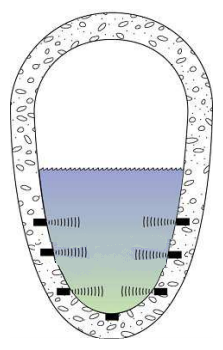
Normally the inlet and outlet networks are made up of circular, oval or composite ducts. The drawing is an example of an oval duct where 3 strings (6 probes) have been installed. At installation, it is best to seal the probes and cables inside the pipe walls. So that residues such as plastics, carried along with the effluents, do not adhere to them.
The performance of the flowmeter depends on the number of strings installed at the measuring point. Up to eight strings are possible. It is also very important to have sufficient straight sections and an accurate section reading. If these conditions are met, the measurement uncertainty can be less than 5% for this type of application.
Advantages of the flowmeter
1# We can use probes with different frequencies depending on the section. Low-frequency probes are intended for larger widths and high-frequency probes for the bottom.
2#Ifthe duct geometry is not uniform, its section can be defined using a 20-point matrix.
3#Theflowmeter has excellent reproducibility.
4#And the costs of the municipalities will be reduced. Since this will be paid for the flow actually discharged and not for the flow entering the station, which is always higher.
In addition, Matelco’s technical service has a team of engineers and technicians trained to train its technical staff.
We recently explained in a previous post the specific case of a training we conducted at the facilities of a power plant. This training helped their personnel to optimize the operation of the Swan analyzers to the maximum.
Last but not least, another of our services included in our technical assistance are field repairs. Our technicians are at your permanent disposal for diagnostics, troubleshooting or for any situation that requires our intervention.
Contact our team to learn more about wastewater flow measurement in sewer networks. We will propose you your best option in flowmeters for sewage treatment plants.