

Objectives to be developed in this article on organic load control in drinking water:
- Improved identification of potential organic contaminants at plant inlet
- Improved efficiency of chemical addition in the coagulation-flocculation process.
- Early detection of activated carbon filter saturation.
- Decreased energy consumption in UV disinfection control and increased lamp durability.
- Water storage: ensure the quality of drinking water by continuously measuring water quality levels.
organic contaminants prior to distribution.
What is organic load?
Drinking water comes from a wide variety of sources such as rivers, lakes, aquifers and reservoirs and usually contains natural organic matter (humic, fulvic, tannic acids, etc.). Thus we can define the organic load as the content of carbon compounds in an effluent. These carbon compounds are chemical structures where carbon is bonded to hydrogen and other elements such as sulfur, oxygen, nitrogen, phosphorus, chlorine, etc. There is no single structure and the number of carbon atoms can vary from one, as in the case of methane, to millions, as in DNA.
 Image 1: F. J. Stevenson: Humus Chemistry. Genesis, Composition, Reactions. 2. Auflage . John Wiley and Sons, New York (1994)
One of the main objectives of the drinking water treatment process is to remove these dissolved organic substances.
How do we measure the organic load?
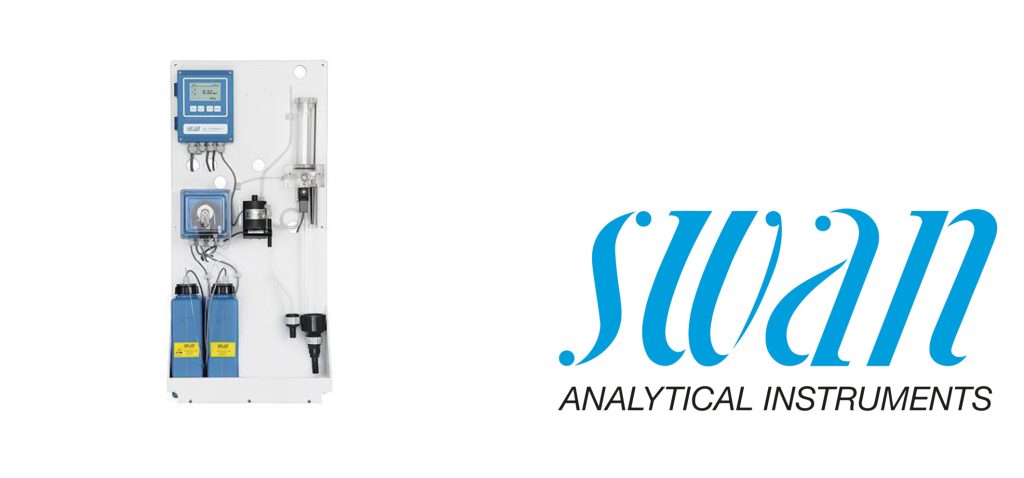
From Matelco we propose you the AMI SAC254 analyzer, from the Swiss company SWAN ANALYTICAL INSTRUMENTSIt monitors dissolved organic matter by UV absorption at 254 nm (based on DIN EN 38404-4) since many organic substances absorb UV light at this wavelength. This allows accurate analysis of trends in organic matter concentration, making it easier to monitor drinking water quality with greater confidence. Thanks to its simplicity of use and low maintenance, the AMI SAC254 analyzer is an ideal solution for on-line monitoring of organic load.

Technical characteristics:
- AMI transmitter in IP66 aluminum enclosure
- Overflow flow cell, with adjusting valve
- Photometer with flow sensor
- Low maintenance and easy handling
- Pre-calibrated at the factory and ready for use
- Measurement range: 0.05 to 60 Abs m-1
- Variable optical pitch length 10 to 100 mm for adjustment of the measuring range
- Measuring time: 1 min
- Optional cleaning module, by addition of chemical agents, to prevent biological growth in the flow cell and photometer. Cleaning frequency controlled from the transmitter
Applications in water treatment plants (DWTP)
 Water intake
Installing the AMI Sac at the inlet of the DWTP allows us to:
- Monitoring of raw water organic load changes for trend analysis.
- Early identification of organic contaminants for immediate management and process adjustment.
Example of river water measurement after the first filtration where a significant peak is detected after a strong storm.

In the next installment we will continue to look in detail at the rest of the applications.
If you have any questions or doubts about this analyzer, just fill in the form on our website and one of our experts will contact you as soon as possible.